
Discover Nova Scotia Through Arts and Culture Fall Getaways
Make your playlist a work of art. Create pottery by the sea, join a Celtic cèilidh, take part in an Indigenous glass art workshop, and more.


(Photo by Daniel Heidemeyer)
Deaf travelers, Lily Yu and Daniel Heidemeyer (www.deafjourney.com) spent a week exploring parts of Nova Scotia and were pleasantly surprised by how many experiences could be made accessible with a little advance planning. This guide shares their firsthand experiences, favorite stops, and practical Deaf accessibility tips to help you explore Nova Scotia with greater confidence.
Nova Scotia won us over quickly! As Deaf travelers visiting our third Canadian province, we found dramatic coastlines, colourful fishing villages, fresh seafood, centuries of maritime history and more Deaf-friendly options than we expected – from ASL interpreted tours at Parks Canada sites to visual alarms in hotel rooms. We spent a week exploring and it wasn’t nearly enough. We’re already dreaming of our return!
Our best advice? Ask ahead. Some of the most helpful accessibility options aren’t widely advertised, but we found that staff were often happy to arrange accommodations when we reached out in advance. Parks Canada offers private tours with ASL interpreters at national historic sites when requested in advance. Museums provide captioned videos and apps with tour commentary and exhibit information in text, and some tour operators can provide written transcripts upon request. From historic sites and museums in Halifax to coastal communities and national historic sites around the province, a little preparation made a big difference.
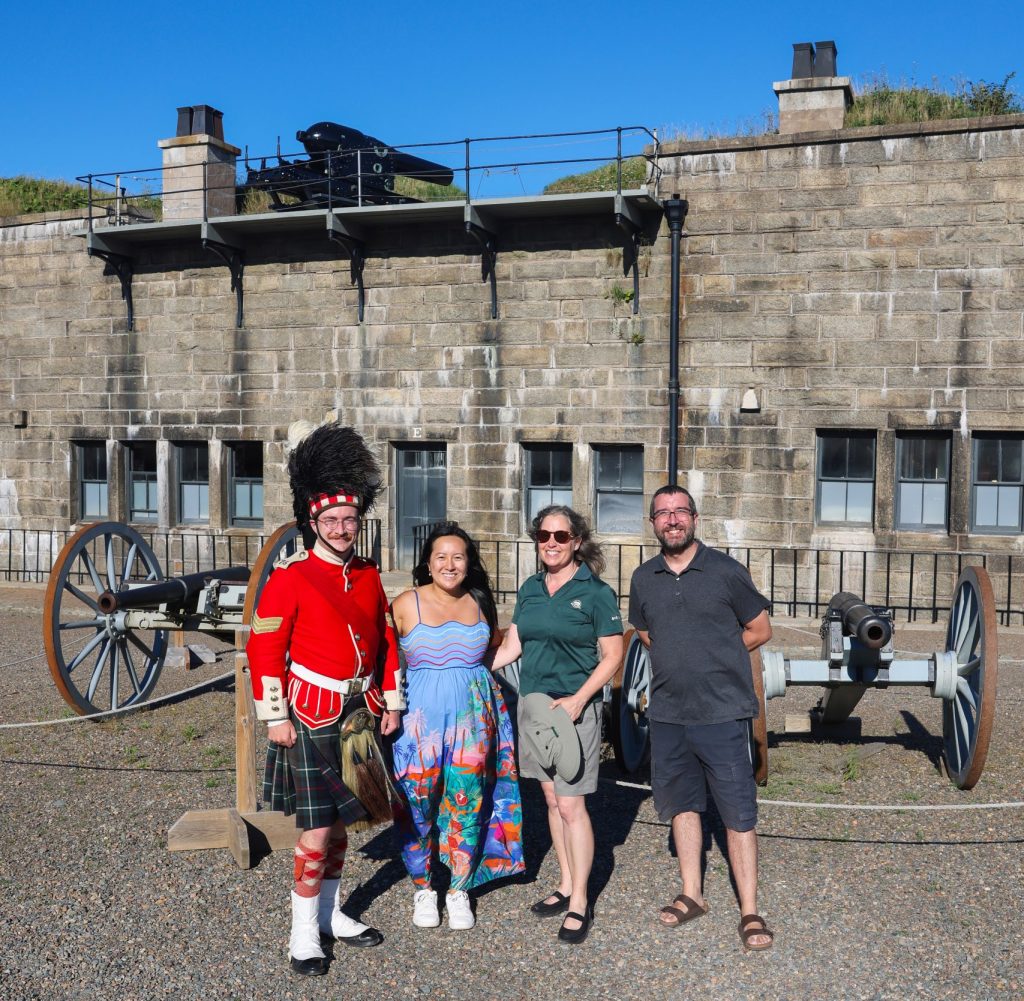
Halifax Citadel National Historic Site (Photo by Daniel Heidemeyer)
Moxy Halifax Downtown: We spent three nights at Moxy Halifax Downtown, the first Moxy hotel in Canada. With its youthful social atmosphere and stylish boutique feel, it was a fun place to begin our Nova Scotia adventure. Our accessible room was cozy and well equipped, with a visual doorbell light, visual fire alarm, and spacious walk-in shower. Hotel staff told us it was one of the larger rooms at the property. At check-in, we also received a poker chip redeemable for a free welcome drink, a fun little touch that immediately set the tone for our stay.
Halifax Harbour Hopper: Want to see Halifax from both land and water? The Halifax Harbour Hopper is a fun way to experience the city from two perspectives in one tour. The amphibious vehicle took us past Citadel Hill National Historic Site, the Halifax Public Gardens, St. Paul’s Church, and Spring Garden Road before splashing into Halifax Harbour. Once on the water, we cruised past Georges Island Lighthouse, the waterfront boardwalk, the historic stone buildings of Historic Properties, and the Maritime Museum of the Atlantic. The narration covers everything from the Halifax Explosion and the history of the naval dockyards to Halifax’s role during wartime and peacetime.
Canadian Museum of Immigration at Pier 21: Visit the Canadian Museum of Immigration at Pier 21, where we learned about the experiences of immigrants arriving in Canada and the important role immigration has played in shaping the country. The museum brings these stories to life through interactive exhibits, personal stories, artifacts, photographs, and multimedia displays. We appreciated how these elements helped communicate the courage, hope, challenges, and resilience behind the immigrant experience.
Halifax Citadel National Historic Site: Perched above the city, Halifax Citadel National Historic Site is where Halifax’s modern waterfront meets centuries of military history. Completed in 1856, the Citadel is the fourth British fort built on the site and today commemorates Halifax’s important role as a naval station of the British Empire. But the Citadel is much more than a traditional museum. Throughout the day, interpreters dressed in period uniforms, including the 78th Highlanders and Royal Artillery, bring the fortress to life. You can watch military drills and pipe and drum performances, explore exhibits and visual displays, and experience Halifax’s military history firsthand. We arrived in time for the daily Noon Gun, and it was an unforgettable experience. It was exciting to watch, but be prepared: the cannon is very loud, and you’ll feel it as much as see it! The highlight of our visit, however, was our private tour with an ASL interpreter, which we requested in advance. Our tour guide, Ben, Parks Canada staff member Michelle Marchand, and ASL interpreter Shane made the experience especially meaningful. Having direct access to the information in our own language allowed us to learn much more about the Citadel as we explored its historic buildings and interactive exhibits.
Art Gallery of Nova Scotia: The Art Gallery of Nova Scotia is Atlantic Canada’s largest art museum, featuring local, regional, and national art, along with contemporary works and Indigenous perspectives. One of our highlights was the Maud Lewis collection, including the actual tiny, colorful house where the beloved Nova Scotia folk artist lived and painted. Seeing the house in person offered a fascinating glimpse into her life and artistic world.
Halifax Central Library: The Halifax Central Library is worth visiting for the architecture alone. Its striking design and vibrant community spaces have made it a downtown landmark and a place locals affectionately call “Halifax’s Living Room.” Grab a coffee, relax inside, and head up to the rooftop terrace for views of the city.
From Halifax, we travelled along the Lighthouse Route to Mahone Bay. Along the way, we visited Peggy’s Cove which quickly became one of our favourite stops! We loved wandering the colourful fishing shacks, boats and rocks around the iconic lighthouse. We continued driving, weaving in and out of coastal villages such as Hubbards, Chester, and Lunenburg. We spent a night at the Black Forest Cabins in Mahone Bay, which was a modern Scandinavian-inspired design tucked amongst trees with lots of natural light. The shared cedar sauna and easy access to the walking trail made for a peaceful and stylish stay.
Salty Dog Sea Tour of Oak Island: We joined Salty Dog Sea Tours for a 90-minute narrated boat tour around Oak Island and the beautiful islands of Mahone Bay. If you’re a fan of The Curse of Oak Island TV show, this tour is an especially fun way to see locations connected to the popular History Channel series. Even if you haven’t watched the show, the legends surrounding Oak Island are fascinating. For more than 200 years, stories of buried treasure and mysterious discoveries have surrounded the island. The tour covers the island’s history, the famous Money Pit, treasure-hunting theories, and locations connected to the ongoing search, all while taking in the scenic coastline and surrounding islands. The tour operates aboard the Island Belle, a 25-foot tritoon that carries up to 12 passengers.
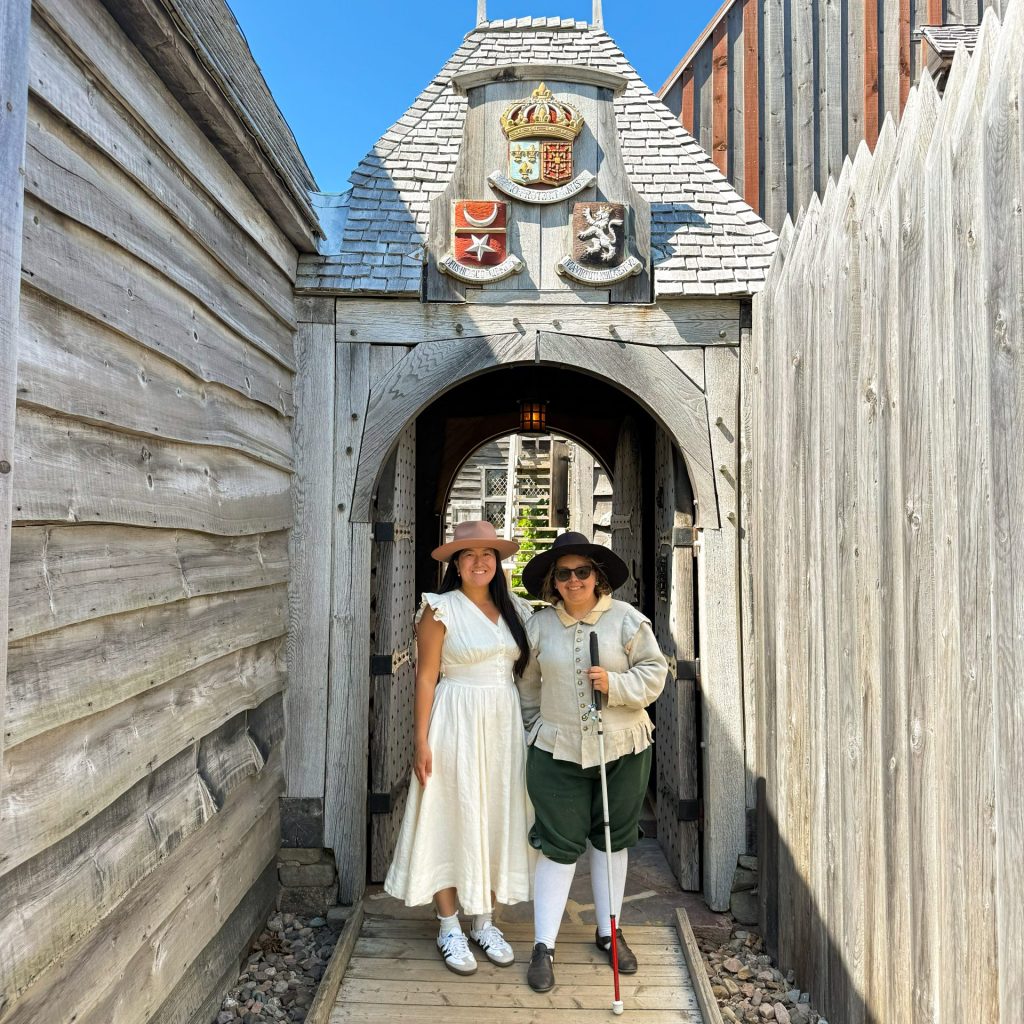
Port Royal National Historic Site (Photo by Daniel Heidemeyer)
From Mahone Bay, we made our way across the province to the Digby Neck area for a whale watching experience with Petit Passage Whale Watch. It was our first time seeing humpback whales up close and we were amazed when three of them swam right alongside and even underneath our boat. Watching them surface so close to us was unforgettable! We spent a night at the Queen Anne Inn in Annapolis Royal, a beautifully restored Victorian within easy walking distance to the town center, and two nights at The Inn at Grand Pré Winery, located within the UNESCO Landscape of Grand Pré near Wolfville. Located in the heart of Nova Scotia’s wine country, this inn combined historic character with a fresh modern feel and included a wine tasting and a daily continental breakfast.
Fort Anne National Historic Site: Walk the earthen walls of Fort Anne National Historic Site which sits along the Annapolis River in the historic town of Annapolis Royal and is one of Canada’s oldest national historic sites. Over the centuries, French, Scottish, First Nations, and British forces fought over this strategically important location. Today, visitors can walk along the historic earthen fortifications, explore the 1797 Officers’ Quarters Museum, and learn about the people and events that shaped the region.
Port Royal National Historic Site: Across the Annapolis Basin from Annapolis Royal, step inside the Port-Royal National Historic Site which recreates one of the earliest French settlements in North America. The reconstructed buildings offer a glimpse into life in the early 17th century, when French settlers established a colony along the Nova Scotia coast. We enjoyed exploring the site and learning about daily life through costumed interpreters and period demonstrations. Our guide, Brenda MacDonald, was outstanding! Her knowledge and storytelling brought Port-Royal’s history to life. It was also our first time being guided by someone who is legally blind, and we were impressed by how confidently and engagingly she shared the stories of the site. The experience was a powerful reminder that people with disabilities bring valuable perspectives, knowledge, and experiences to the visitor experience.
Grand-Pré National Historic Site: Grand-Pré National Historic Site holds a central place in Acadian history and is a powerful symbol of Acadian heritage. The site commemorates Grand-Pré as a major Acadian settlement from 1682 to 1755 and tells the story of the Deportation of the Acadians, which began in 1755 and continued until 1762. As we explored the grounds, we learned about Le Grand Dérangement, a painful chapter of history that continues to shape Acadian culture and identity around the world. For many Acadians, Grand-Pré remains an ancestral homeland, making this more than simply a historic site. It is a place to pause, learn, and understand an important part of Nova Scotia’s cultural history.
Our week in Nova Scotia showed us that accessibility doesn’t always mean finding an experience that is already perfectly set up for Deaf travelers. Sometimes, it means knowing what to ask for and giving the destination enough time to prepare. A simple email before your trip can make a significant difference. Ask whether an ASL interpreter, written transcript, captions, visual alert, or text-based alternative is available. When possible, make requests well in advance, especially for interpreting services.
We hope our experiences help make your own trip easier to plan. Nova Scotia has plenty to discover, and with a little preparation, Deaf travelers can enjoy its history, culture, museums, and coastal scenery while having better access to the stories that make the province special.
Deaf Journey, founded by Deaf travel content creator and accessibility advocate Lily Yu, redefines how the world experiences travel through accessibility. By identifying the details destinations often overlook, Lily turns inclusion into measurable influence, uncovering opportunity, building brand trust, and inspiring confidence among travelers with disabilities. Through professional photography, cinematic videography, and authentic storytelling, Lily and marketing manager Daniel Heidemeyer showcase both iconic destinations and hidden gems worldwide empowering their audiences to travel fully and without barriers. Lily and Daniel were travel media guests of Tourism Nova Scotia and Discover Halifax.

Make your playlist a work of art. Create pottery by the sea, join a Celtic cèilidh, take part in an Indigenous glass art workshop, and more.

Whether you prefer a Jeep, an ATV, a bicycle, or an e-bike, mix Nova Scotia’s beautiful views and colours into your playlist with outdoor adventures.

When people think of Cape Breton Island, places like the Cabot Trail often steal the spotlight. But tucked along the island’s southeastern shore is...

Wolfville is a year-round destination that has it all: variety and liveliness of a large city, small-town charm, unforgettable flavours, extraordin...

Nova Scotia is a great place to see fall colours because its autumn scenery is so varied and easy to explore. Travellers can see orange and yellow ...

Tag your travel photos to be featured.
