






Stay Somewhere Unforgettable in Nova Scotia this Fall
Your next great stay is here. Add scenic oceanfront rooms, swoon-worthy vineyard stays, or glamping domes made for stargazing to your playlist.
When planning a trip, booking those must-see things to do, places to stay, and making sure you know where to get that perfect cup of coffee or tea to kickstart your day are all part of the fun… and researching things like weather, currency, distance between those booked adventures and destinations are also an important parts of the pre-trip planning process.
NovaScotia.com strives to be a top travel resource for all things Nova Scotia – from offering information on places to stay and outdoor activities and guided tours to road trip itineraries, the blog section which features articles with ideas, tips, hints, and recommendations on things to see and do such as unique experiences, popular hikes, and where to find a lobster dinner or the BEST lobster rolls.
From the many trip-planning questions that our many tourism colleagues have received by email, phone and in-person at visitor information centres, we’ve compiled a list of some of frequently asked questions (FAQs) – with our answers and recommendations – to help you ensure that you are prepared for your adventures in Nova Scotia!
Additional FAQs can be found within each of Nova Scotia’s seven travel region‘s pages, as well.
Want to visit a lighthouse? Planning to go whale watching? Looking to explore UNESCO sites, the Cabot Trail, top festivals & events, award-winning wineries, National Historic Sites and more? Hit the ground running when you arrive, thanks to our Top 25 page.
Depending on your interests, activity level, and what areas of Nova Scotia that you will be travelling within, you’ll discover many of the top attractions, activities, events and more that continue to draw travellers to Nova Scotia each year.
One saying you may hear in Nova Scotia – “If you don’t like the weather, wait five minutes or drive five kilometers”.
And it’s true!
Nova Scotia is known as Canada’s Ocean Playground – and for good reason – we’re almost entirely surrounded by water! In fact, we are bordered by three different bodies of water: the Bay of Fundy, the Northumberland Strait and the Atlantic Ocean. Each of these bodies of water influence the weather across Nova Scotia. For example, a south breeze off the Atlantic Ocean in Nova Scotia could mean thick sea fog and mist in Halifax but an hour’s drive away in the Annapolis Valley, it may be sunny and warm.
Fog can often lower the temperature by up to 10C/50F in a short period of time which will make you happy that you have that light jacket or sweater with you. Heading out on a boat tour? That extra layer may come in handy on the water too.
While fog is common in spring and summer along the coast, it is not common to experience foggy conditions for an entire day in Nova Scotia.
When warmer air from weather systems travels over the cold Atlantic Ocean, the moisture in the air turns to fog. Coastal communities along the Atlantic Ocean experience more foggy mornings than in other areas of the province however, if the forecast is calling for rain and/or cloudy skies, the fog may stick around longer or you may see it retreat out over the ocean and roll back in and out over the day.
So, while your morning may start off foggy, it often “burns off” or disappears as the sunshine heats the air and/or as you start driving away from the coast towards your next adventure.
In Nova Scotia, the provincial liquor regulations state that the minimum legal age for purchasing and/or consuming alcohol is 19.
For travellers with children under 19 years of age, you can dine in establishments that serve food and alcohol up until 10:00 PM. However, if the restaurant has a bar and/or shifts from being a restaurant to become a late night venue such as a lounge, cabaret, tavern, pub, and/or nightclub, travellers with children under 19 years of age would only be permitted to dine in that business until 9:00 PM.
If you are planning to dine later in the evening with children, please check with the restaurant or eatery for more information. Take-out options may be available!
This depends entirely on you and your starting location!
You can drive to Nova Scotia
Nova Scotia is a peninsula that is connected to the province of New Brunswick. This means you can easily drive – or even cycle – into Nova Scotia.
You can take a ferry to Nova Scotia
Each year, we welcome travellers who arrive in Nova Scotia via:

You can take the train to Nova Scotia
All aboard! Hop aboard VIA Rail’s Ocean Route train in Montreal and let the scenery pass you by. You can arrive in Nova Scotia via stops in Amherst, Truro and in downtown Halifax.
You can take a bus to Nova Scotia
Both Greyhound and Voyageur bus lines connect with Maritime Bus which services over 30 stops across the province.
You can also book yourself on a motorcoach bus tour that will take you to, and around, Nova Scotia to see the sights. Check with a local travel agent or tour company to explore your options for a bus tour excursion to Nova Scotia
You can fly from anywhere to Nova Scotia
Arrive on one of the many non-stop flights arriving from across Canada, the USA, UK, Germany, Europe and Bermuda.
You can cruise to Nova Scotia
Coming for a short visit aboard a cruise ship? With many major cruise lines arriving in Nova Scotia from April through November, we look forward to showing you why you need to come back and visit with us longer! Visit Cruise Atlantic‘s website to learn more about cruising to Nova Scotia.

You technically can – BUT – Nova Scotia is a lot bigger than it looks!
If you were to arrive in Nova Scotia aboard the CAT Ferry and drive directly from Yarmouth, along the 100 series highways all the way to the Big Fiddle on the Sydney waterfront on Cape Breton Island, it would take you approximately 7 hours, without stops, AND you would cover 700 km / 435 miles… and would miss out on experiencing regional highlights, such as:
Nova Scotia is continuing to build fast and ultra fast charge stations in locations throughout the province in order to meet the growing need from residents and travellers with electric vehicles (EVs).
Visit our EV Charging Stations page for information on new and upcoming accessible ultra-fast chargers and visit plugshare.com to view all available EV charging stations across Nova Scotia.

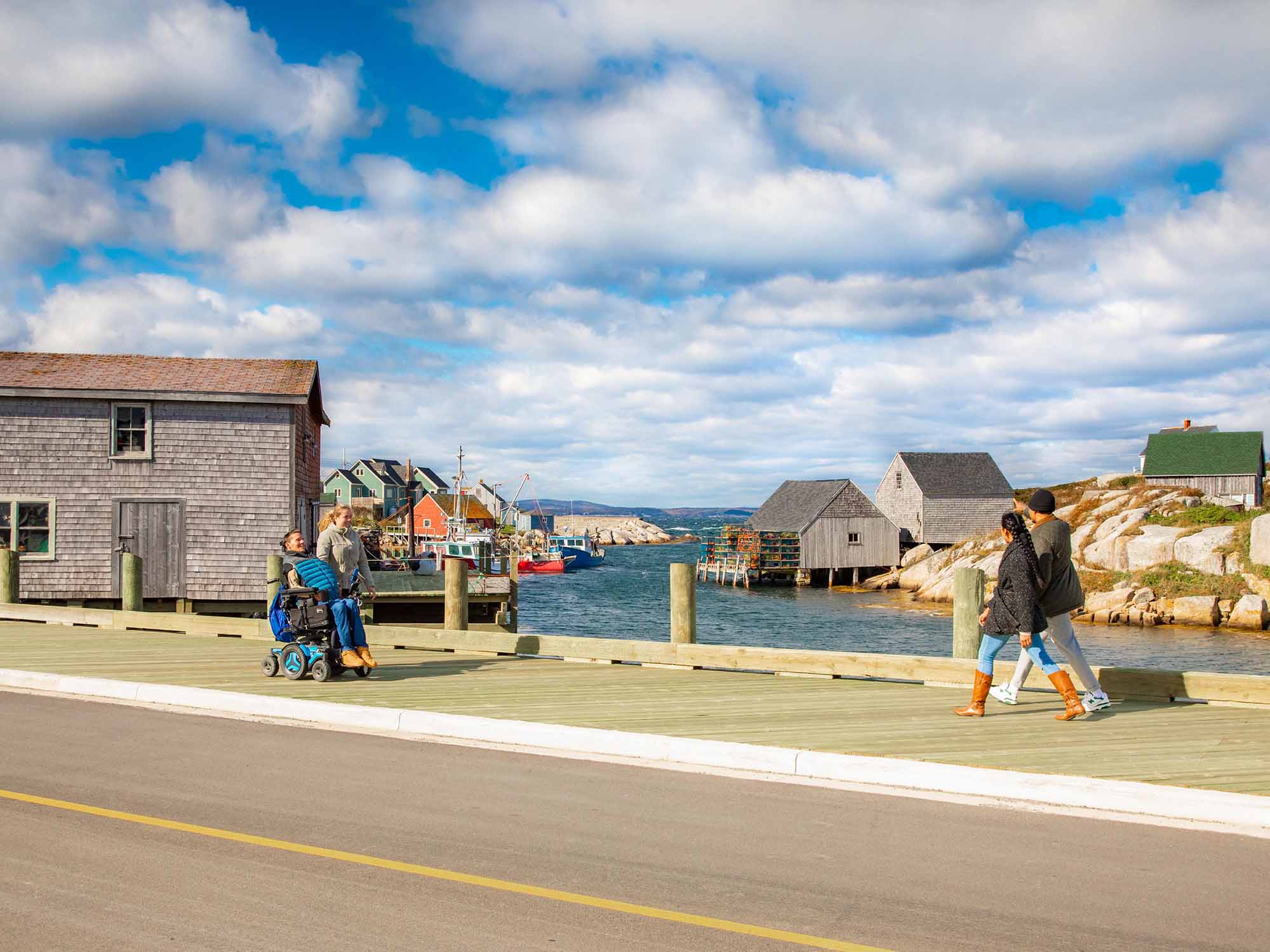
We certainly can! Please visit our Wheelchair Accessibility in Nova Scotia section to view businesses and properties in each of Nova Scotia’s seven travel regions that have self-identified as being wheelchair accessible and/or partially accessible / wheelchair friendly.
Many businesses include information around the accessibility of their property in their business listing(s) on our website, however you should always contact businesses directly with questions and for more information about your specific needs.
Most highways are not lit at night in Nova Scotia and if you are not used to driving at night without forms of lighting such as streetlights, we recommend that you arrive at your destination before nightfall… at least until you are sure you are comfortable with driving in the dark. Driving at night in Nova Scotia, even with your car’s lights on, can still feel a bit blinding when you are not used to it.
Urban centers, such as our capital city of Halifax and Sydney on Cape Breton Island, are well lit and downtown areas in many towns and communities across the province are too. For those arriving by air, the area directly surrounding the Halifax Stanfield International Airport, which includes hotel accommodations, is also well lit.
It shouldn’t come as a surprise that Nova Scotia is a spectacular place for stargazing, thanks to a lack of light pollution at night!

While wearing seatbelts and having children in appropriate car seats, driving the posted speed limit, and obeying traffic signals and signs are important rules of the road here, there are some laws in Nova Scotia that may not be the same across Canada and/or in other countries, including:

There may be some businesses that accept US dollars – but be sure to ask when you enter a business and the exchange rate they offer. It is important to remember that you may not receive the most current exchange rate at a business.
It may be easier – and more economical – for travellers with USD to visit a bank or to use a bank’s ATM banking machine to exchange USD for Canadian dollars. Be sure to check with your preferred US bank to see if they allow free or reduced cost transaction fees from certain Canadian banks.
Along with cash, Visa Debit, MasterCard Debit and major credit cards are accepted in Canada which allows you to receive the daily exchange rate for that day.
Cell service is strong along most major routes and in cities, towns and communities throughout Nova Scotia however there are areas where you will find coverage is not as strong and at times, and you may pass through an area with no coverage at all.
The Province of Nova Scotia is continuing to improve service to ensure 95% coverage for standard-definition service (e.g. emails, web browsing and social media) and 99% coverage for making calls on your cellphone or smartphone when travelling throughout the province.

B&Bs or bed & breakfasts are not quite the same as Airbnbs. The term “Airbnb” has become synonymous with rental accommodations, thanks to the popular online booking platform that offers a wide selection of places to stay that can range from a room in a private home to the rental of a luxurious vacation home.
A traditional bed and breakfast is an accommodation where the owner or operator lives onsite, offers 1 to 4 guestrooms and/or suites with ensuite, private or shared bathrooms, and breakfast is included in the price and served each morning of your stay. Some bed and breakfasts serve a full, hot breakfast while others may provide a continental or buffet breakfast. Most B&Bs have common living areas for guests to use that are separate from the owners’/operators’ living quarters.
Nova Scotia has several kinds of ticks, including the blacklegged tick that carries the bacteria that can cause Lyme disease. We encourage everyone to practice tick prevention and to always check for ticks after you spend time outside in nature.
Tick prevention measures can include:

Halifax is very walkable with a public transit system, taxi companies and rideshare access that can help you get around the city with ease.
If you are arriving at the Halifax Stanfield International Airport, you can grab a taxi or limo, order an Uber or Lyft ride share, take an airport shuttle (check with your hotel to see if they offer this service), a private shuttle service, Maritime Bus or the Halifax Transit 320 Airport-Fall River Regional Express bus service. Accessible transportation options to/from the Halifax Stanfield International Airport are also available.
Getting around downtown Halifax is easy too. You can walk everywhere but you can also cab, public transit, Uber, or, for the more adventurous, rent bikes or go on a guided tour with I Heart Bikes, enjoy a guided waterfront Segway tour, or download the Bird Canada app to find an eBike/eScooter to use. You can also book a Halifax Harbour boat tour or hop on and off the pink double decker Hop On Hop Off City Tour Halifax. Want the best of both worlds – book a Harbour Hopper tour aboard an amphibious vehicle to see Halifax from both land and sea!

If you plan to use Halifax Transit, be sure to download the HFXGO app to create an account and to purchase and load money for bus and ferry tickets and passes. You can also purchase bus tickets at partner retailers or pay with change (no change can be issued on buses so be sure to have the correct change).
Tip: Always request a paper transfer slip when you board a bus or ferry if you are paying with change or a Halifax transit paper ticket. Paper transfers allow you to continue riding to your destination – even if it is a round trip – as long as you ride within 1.5 hours. Tickets via the HFXGO app provide an e-transfer that is good for 2.5 hours.
We highly recommend taking the Halifax Transit ferry on a return trip from the Halifax Waterfront terminal to the Alderney Landing terminal at least once during your Halifax visit. Be sure to visit downtown Dartmouth and the many eateries, shops, and a popular brewery and cidery all within a short walk of the ferry terminal!
Important links:

Nova Scotia is a coastal province with changing seasons and changing weather patterns. While travelling in Nova Scotia, you can check road conditions by dialing 511 on your phone or visiting https://511.novascotia.ca/.
Keep up-to-date with the latest weather forecasts and alerts in Nova Scotia by checking with Environment and Climate Change Canada’s website or download the WeatherCAN app.
We also encourage visitors to check your cellphone’s compatibility with Alert Ready – Canada’s Wireless Public Alerting system for emergency alerts. Visit alertready.ca.


Your next great stay is here. Add scenic oceanfront rooms, swoon-worthy vineyard stays, or glamping domes made for stargazing to your playlist.

Thirsty for a great playlist? Celebrate Nova Scotia drinks with wine tours, craft beer tastings, guided food & drink pairings, and more.
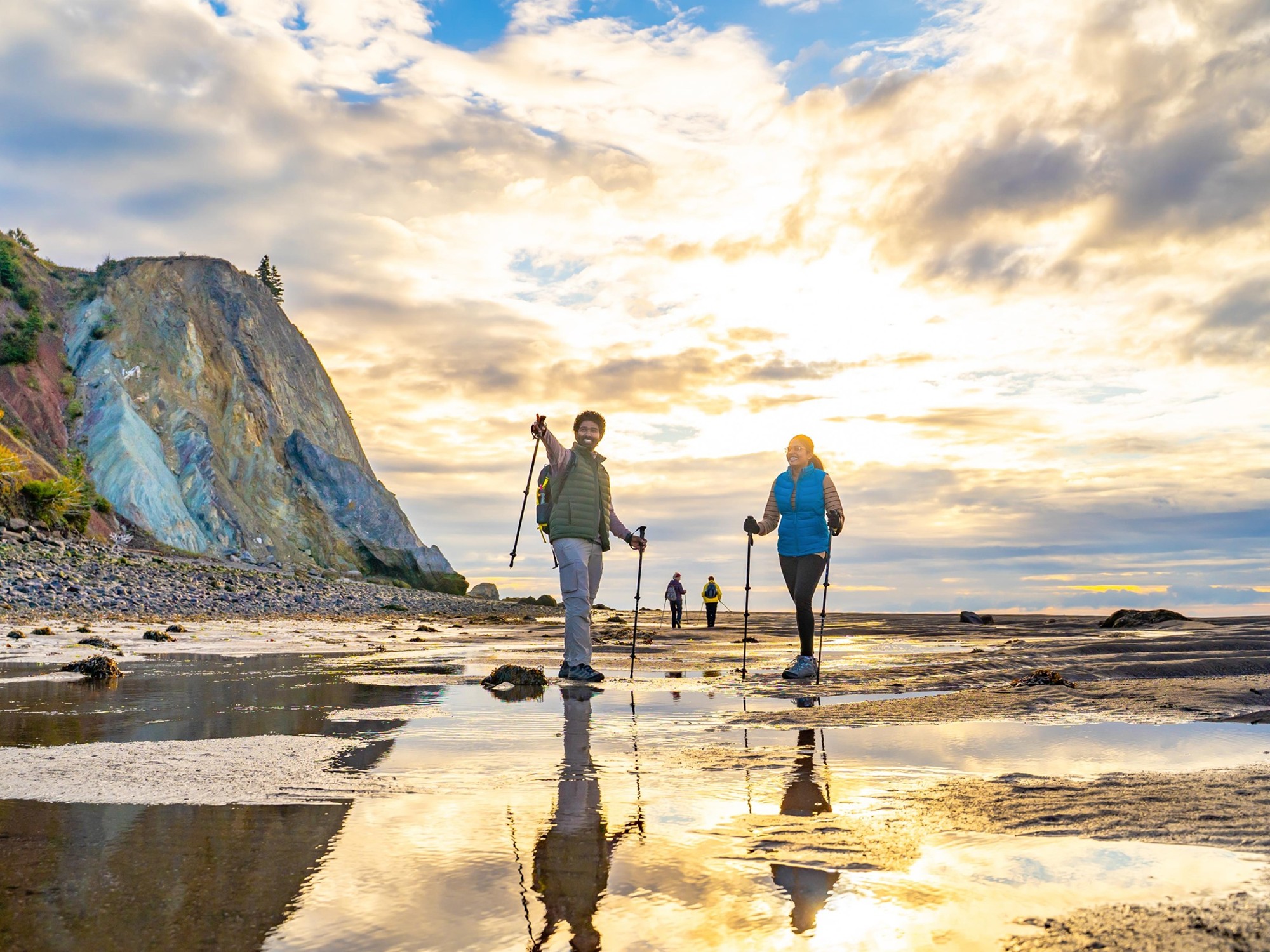
Nova Scotia’s chefs, artisans, hosts, and guides can't wait to welcome you. Add ranch tours, craft sessions, guided hikes, and more to your playlist.

Private chef-led dinners. Chocolate tastings. Farm-to-table meals where you meet the farmer. Add Nova Scotia culinary experiences to your playlist.

Make your playlist a work of art. Create pottery by the sea, join a Celtic cèilidh, take part in an Indigenous glass art workshop, and more.

Tag your travel photos to be featured.
