Skip to Content
People kayaking near the 100 Wild Islands on Nova Scotia's Eastern Shore

100 Wild Islands

What are the 100 Wild Islands in Nova Scotia?

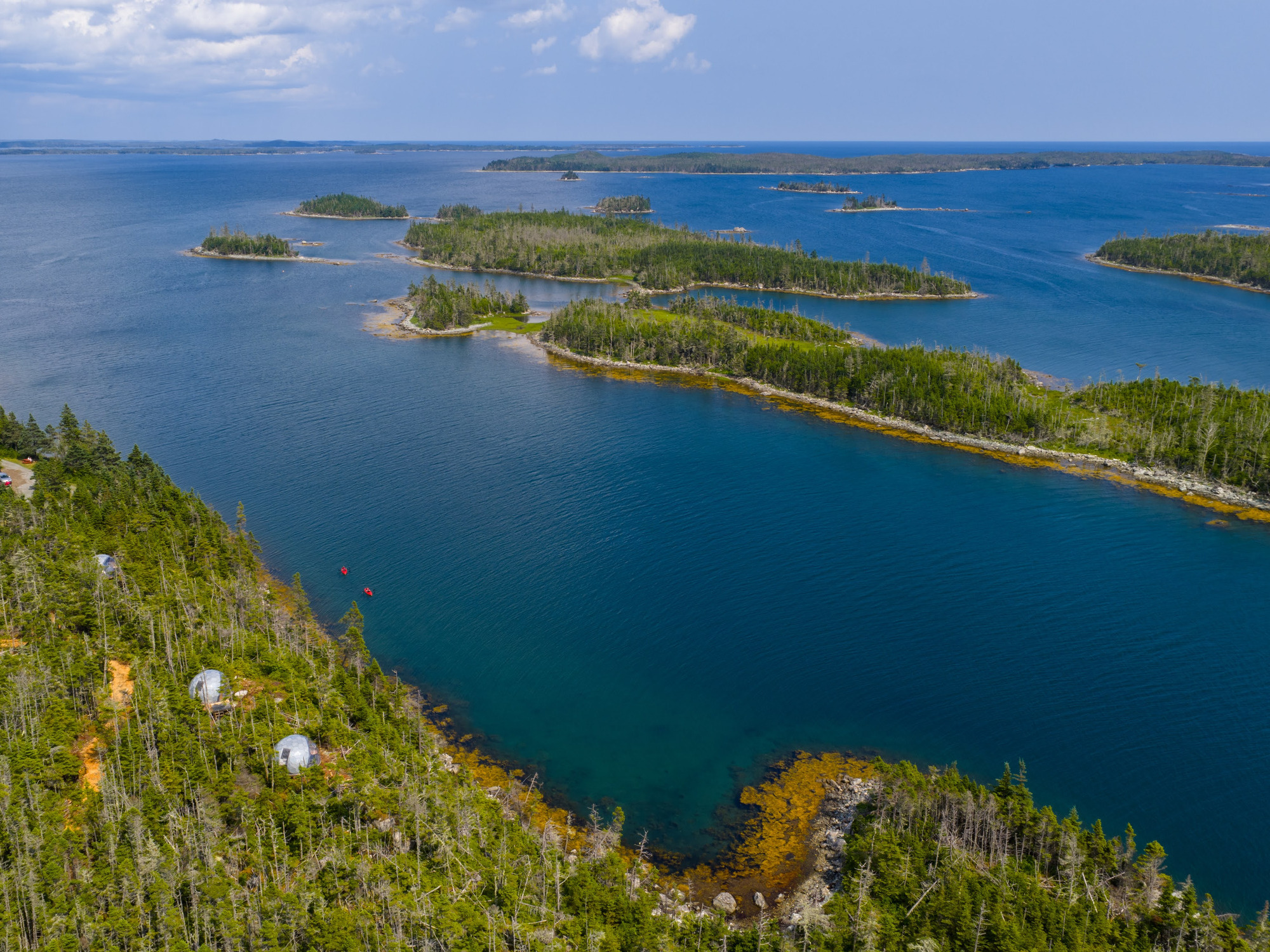
The 100 Wild Islands are a protected coastal archipelago on Nova Scotia’s Eastern Shore, about an hour east of Halifax. Visitors explore the islands by kayak and boat to discover white-sand beaches, turquoise waters, wildlife, and one of North America’s largest protected coastal wilderness areas. Many islands can only be accessed by water, and conditions can change quickly, but the reward is an unforgettable outdoor adventure surrounded by some of Nova Scotia’s most pristine coastal landscapes.

How can you explore the 100 Wild Islands?

The most common ways to explore the 100 Wild Islands are by sea kayak or guided boat tour.

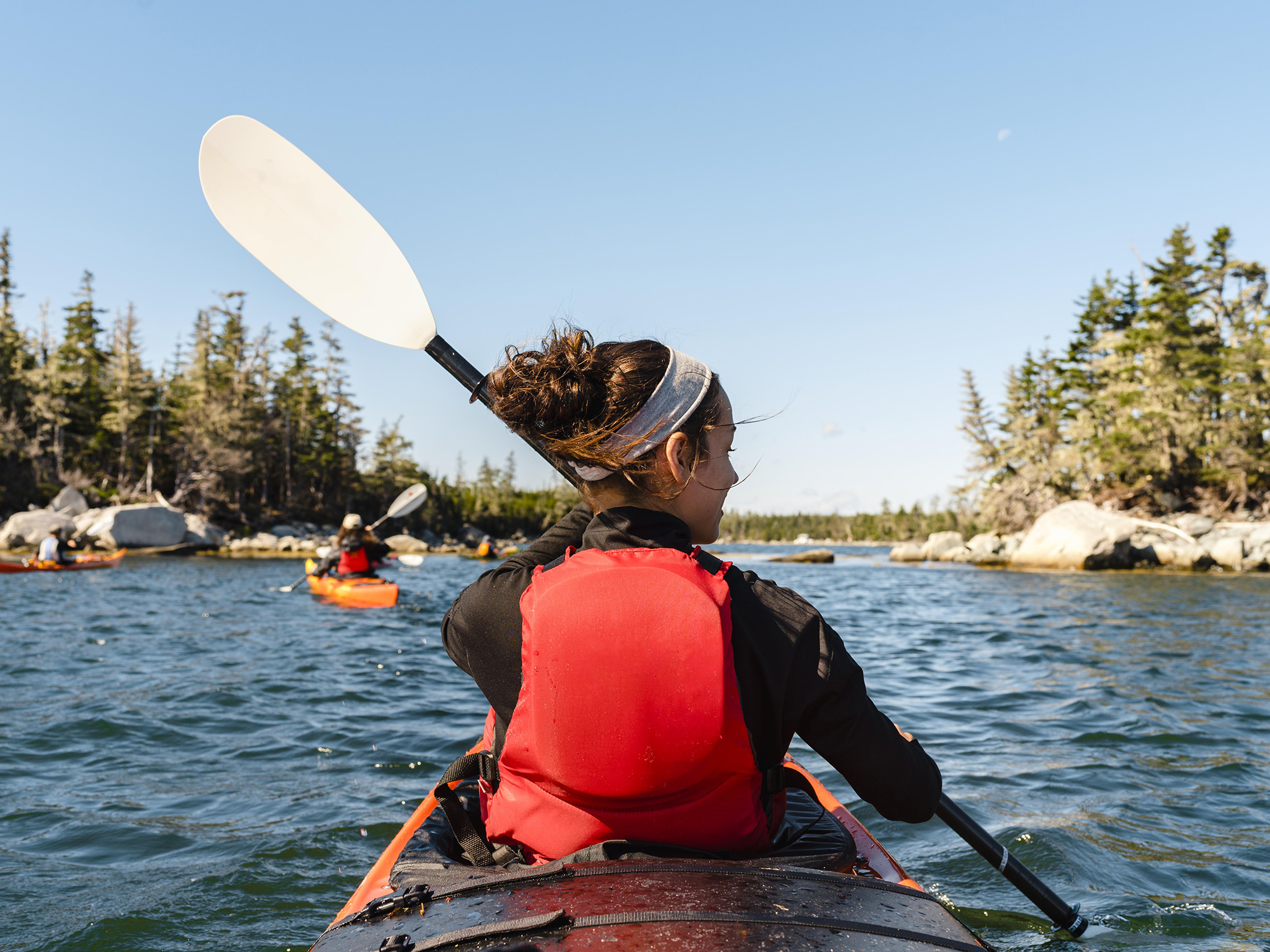
Paddling allows visitors to travel between islands, discover hidden beaches, and experience the archipelago at a slower pace.

Boat tours offer a more accessible option for travellers who want to enjoy the scenery, wildlife, and coastline without paddling.

Many visitors use operators like Coastal Adventures, Norse Cove Sea Kayak Tours, or Murphy’s Scenic Boat Tours as gateways to the islands.

A close up of a person sea kayaking with friends while staying with Norse Cove Camping on Nova Scotia's Eastern Shore.
Norse Cove Sea Kayak Tours

When is the best time to visit the 100 Wild Islands?

The best time to visit the 100 Wild Islands is from late spring through fall. Summer offers warm temperatures, long daylight hours, and popular kayaking and boating conditions. Fall brings colourful coastal scenery, quieter experiences, and comfortable temperatures for hiking and sightseeing.

Weather along the Atlantic coast can change rapidly at any time of year. Wind, fog, waves, and cool water temperatures are all part of the experience and visitors should be prepared accordingly.
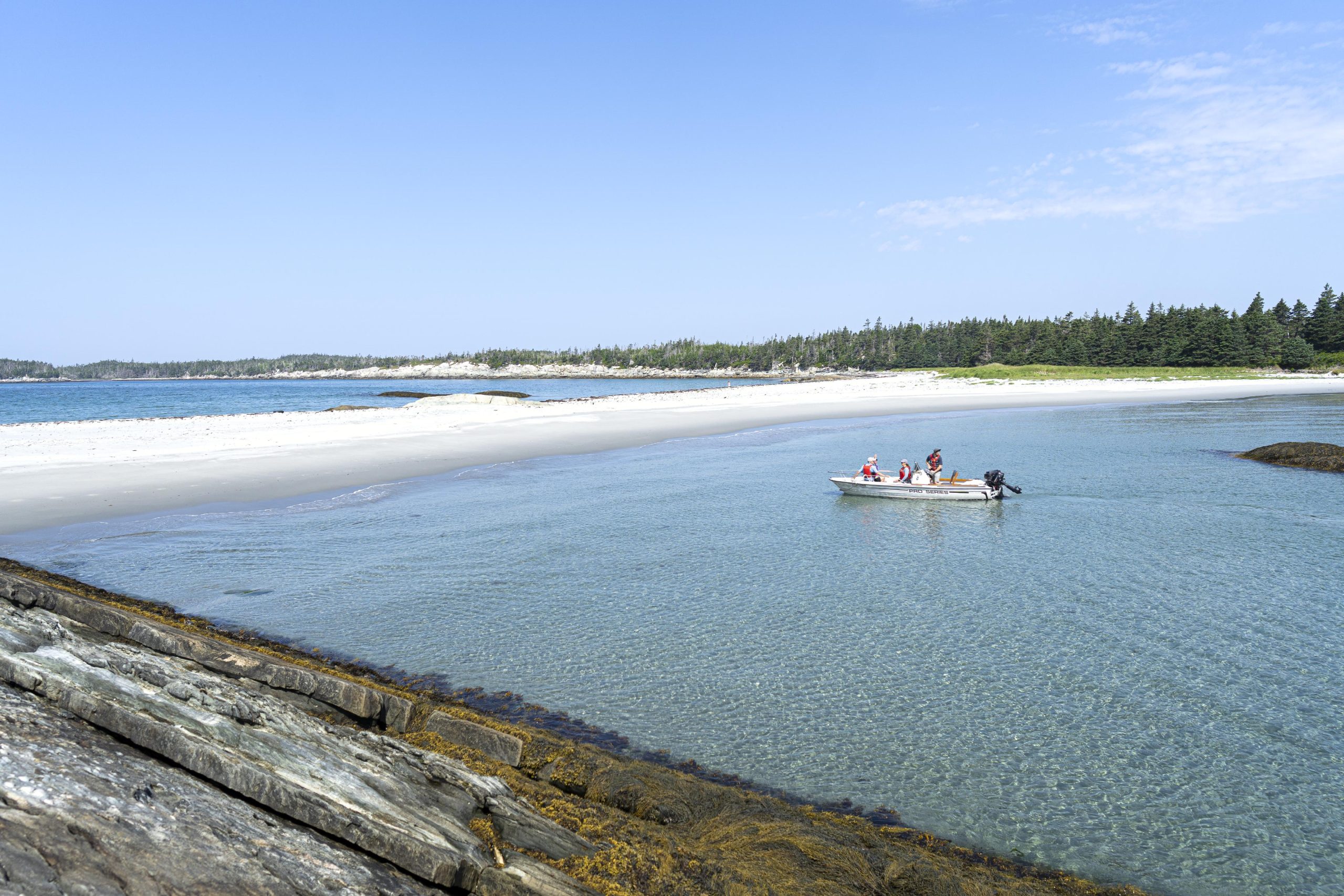
Murphy's Scenic Boat Tours

100 Wild Islands Frequently Asked Questions

The 100 Wild Islands are located along Nova Scotia’s Eastern Shore, roughly one hour east of Halifax via Highway 7, also known as the Marine Drive. The islands are associated with communities including Clam Harbour, Tangier, and Sheet Harbour, and are often explored alongside nearby attractions such as Taylor Head Provincial Park, Martinique Beach, and Clam Harbour Beach.

The 100 Wild Islands are special because they remain largely untouched by development and protect a remarkable variety of coastal habitats. Visitors can experience white-sand beaches, boreal coastal rainforest, rocky headlands, wetlands, barrens, sheltered coves, and crystal-clear waters, often in a single day of exploration.

Few places in Nova Scotia offer such a large, connected wilderness landscape so close to Halifax.

No. Visitors without kayaking experience can join guided paddling excursions or choose a boat tour to experience the islands. Guided experiences provide equipment, local knowledge, and support, making the archipelago accessible to a wider range of travellers.

That said, weather and ocean conditions can change quickly, so independent paddlers should have appropriate skills and experience before setting out.

Yes. Families can experience the islands through guided boat tours, beach excursions, wildlife viewing, and beginner-friendly paddling experiences. Older children who enjoy nature, beaches, and outdoor adventure often find the islands especially rewarding. Parents should keep in mind that this is a wilderness destination with limited facilities and few services once on the water.

Many visitors experience the islands on a half-day or full-day kayaking or boat tour. Travellers exploring the Eastern Shore often combine a visit to the 100 Wild Islands with nearby attractions such as Taylor Head Provincial Park, Martinique Beach Provincial Park, Clam Harbour Beach Provincial Park, and local coastal communities, creating a full day or multi-day Eastern Shore itinerary.

The archipelago supports over 100 bird species, including bald eagles, osprey, shorebirds, seabirds, and songbirds. Visitors may also spot seals along rocky shorelines and coastal habitats throughout the region.

The islands provide some of Nova Scotia’s most important wildlife habitat and are a popular destination for birdwatching and nature photography. Always observe wildlife from a respectful distance and avoid disturbing nesting areas or resting animals.

The 100 Wild Islands offer a true wilderness experience rather than a traditional tourism attraction. Expect limited infrastructure, changing weather, and a strong sense of remoteness. Many islands are only accessible by water, and some experiences require advance planning and outdoor skills. In return, visitors are rewarded with secluded beaches, abundant wildlife, dramatic coastal scenery, and a level of solitude that is increasingly rare in popular destinations.

Yes. The 100 Wild Islands are one of Nova Scotia’s most unique outdoor destinations, offering protected wilderness, wildlife viewing, kayaking, boating, photography, and coastal exploration just a short drive from Halifax.

For travellers looking to experience a quieter, less-discovered side of Nova Scotia, the islands deliver some of the province’s most memorable coastal adventures.

Back to top