Skip to Content
Wild horses on Sable Island in the white sand and blue sea in the background

Sable Island National Park Reserve

What is Sable Island?

Sable Island is a remote island of shifting sand dunes located about 290 kilometres southeast of Halifax, Nova Scotia. Protected as Sable Island National Park Reserve, it is famous for its wild horses, massive grey seal colony, abundant birdlife, and fascinating shipwreck history. Accessible only by air or sea and open for day visits, Sable Island offers one of Canada’s most unique wilderness experiences for travellers seeking wildlife, solitude, and a true sense of adventure.

How do you get to Sable Island?

Sable Island can only be reached by air or sea through approved operators like Picture Perfect Tours and Kattuk Expeditions. Most visitors join a guided tour that includes transportation, logistics, and visitor orientation, with options typically departing from Nova Scotia by aircraft.

Because access is weather-dependent and carefully managed, travel schedules can change and availability is limited, so advance booking is recommended. Independent visitation is restricted, and most travellers visit through Parks Canada-approved operators that manage access and help ensure visitor guidelines are followed.

View of Sable Island from helicopter
Visiting Sable Island with Kattuk Expeditions

Why is Sable Island famous?

Sable Island is famous for its wild horses, which have roamed freely across the island for more than 250 years. The horses are one of the few wild horse populations in Canada and have become a symbol of the island’s remote and untamed character.

Sable Island is also known for having the world’s largest breeding colony of grey seals, more than 350 documented shipwrecks that earned it the nickname “Graveyard of the Atlantic,” and its unique dune ecosystem found nowhere else in Canada.

Many visitors describe Sable Island as one of the most extraordinary and isolated places they have ever experienced.

Sable Island National Park Reserve, wild horses stand in the sand dunes eating grass.
Wild horses on Sable Island

When is the best time to visit Sable Island?

Most visitors travel to Sable Island between June and October when Parks Canada welcomes visitors and weather conditions are generally the most favourable. Each season offers something different, including wildlife viewing, photography opportunities, and changing dune landscapes.

Weather remains an important consideration at any time of year. Fog, strong winds, ocean conditions, and transportation delays can affect travel plans, even during the summer months.
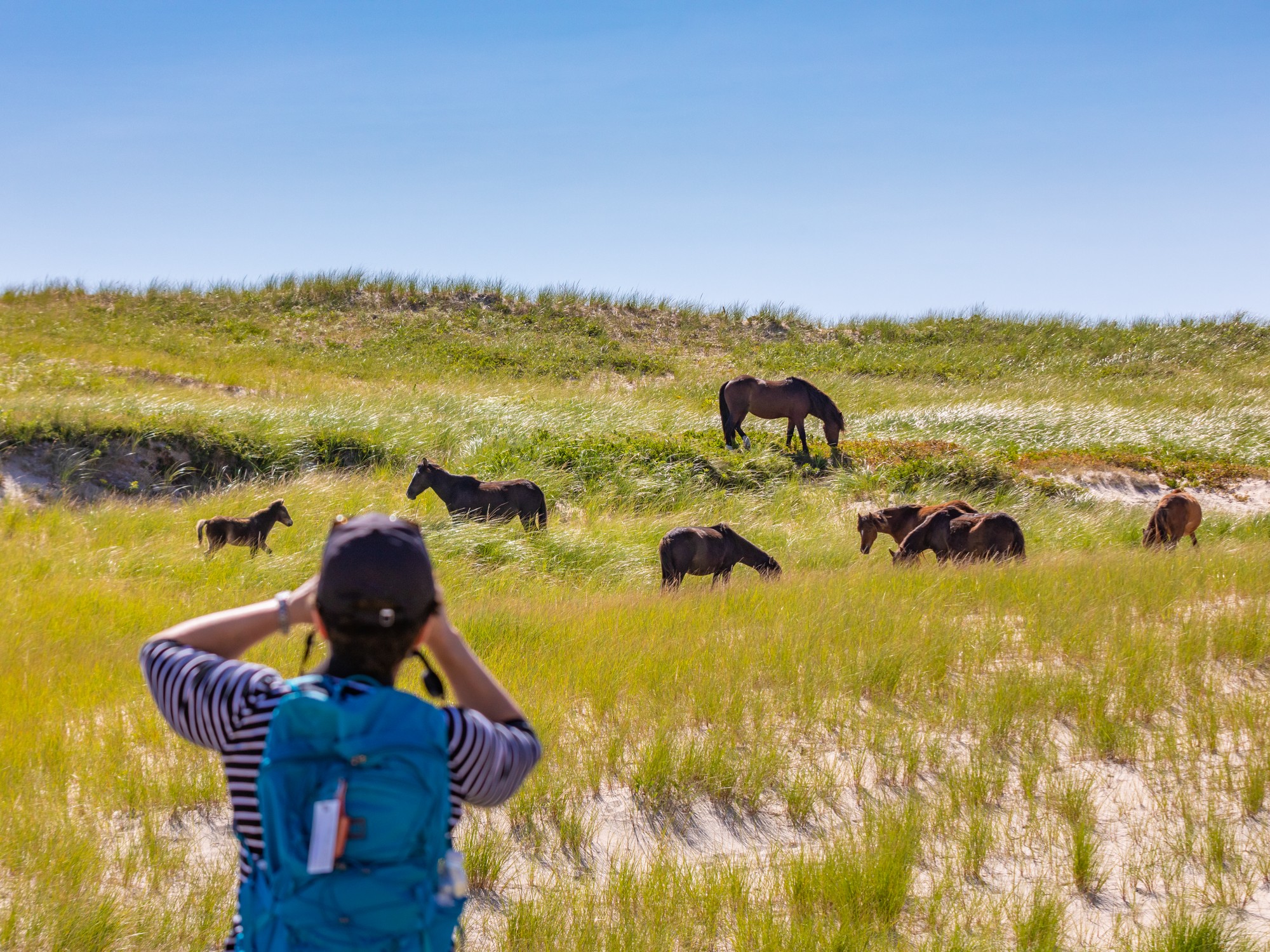
A woman photographs wild horses on Sable Island off the coast of Nova Scotia
Photographing wild horses on Sable Island

Sable Island Frequently Asked Questions

Sable Island is located at the edge of the continental shelf in the Atlantic Ocean, about 290 kilometres southeast of Halifax, Nova Scotia. Due to its remote offshore location, there are no roads, bridges, or ferries connecting the island to the mainland.

Its isolation is part of what makes the island so remarkable and helps protect its unique ecosystems and wildlife.

Yes. Seeing the wild horses is one of the main reasons travellers visit Sable Island. The horses roam freely across the dunes, grasslands, and beaches and have become the island’s most recognizable symbol.

Visitors may encounter horses during guided walks and excursions, but Parks Canada requires people to keep a safe distance and avoid approaching or interacting with the animals.

Wildlife viewing is one of the highlights of any visit to Sable Island. Visitors may see the island’s famous wild horses, hundreds of grey seals, migratory birds, shorebirds, and unique insects and plant species specially adapted to this remote environment. Sable Island is also an internationally important bird habitat and supports species found in few other places.
Wildlife sightings vary by season and conditions, and visitors are required to observe animals from a respectful distance to help protect the island’s fragile ecosystem.

No. Visitors are permitted to visit Sable Island on Parks Canada-approved day trips only or with an approved tour operator. Camping is not permitted.

Yes. For travellers interested in wildlife, photography, remote destinations, and once-in-a-lifetime experiences, Sable Island is one of Nova Scotia’s most unique places to visit. Its wild horses, grey seal colony, vast sand dunes, untouched beaches, and maritime history create an experience unlike anywhere else in Canada.
Visitors should be aware that access is limited, weather can affect travel plans, and facilities are minimal, but many consider the journey well worth the effort.
Sable Island offers a remote wilderness experience unlike anywhere else in Nova Scotia. Visitors should expect minimal facilities, changing weather, strict conservation guidelines, and a strong focus on protecting wildlife and fragile dune ecosystems. Access depends on weather and transportation conditions, and travel plans can sometimes change.
Those seeking wild horses, grey seals, untouched beaches, and extraordinary natural landscapes often find it to be a true bucket-list experience.
Back to top